Leadership Capability · Philippines
Leadership capability for leaders in Philippines who've outgrown their operating model
Philippine enterprises and BPO-scale operations grow on the strength of their leaders. We install the leadership capability needed to run a far larger, more complex organisation.
Serving Philippines · en-PH
engaged at work
Which means 61% are not — the clearest sign capability was never installed.
What's at stake in Philippines
When operations scale into the hundreds or thousands, leadership stops being about individual relationships and becomes about systems that lead at volume.
The constraint is rarely strategy or talent. It is the leadership layer, and most organisations only notice it once growth has already started to strain against it.
The Capability Gap in Philippines
There is a gap between the leadership the business has and the leadership the next stage of growth demands. It is quiet, it compounds, and it does not close on its own. Every organisation in Philippines that grows past its founding shape meets it.
The gap is the real competitor. It does not show on a dashboard. It shows as decisions that take too long, talent that leaves too early, and a leadership team that works harder each quarter for the same output. Naming it is the first move toward closing it.
A familiar story
A supervisor who led a single shift brilliantly now oversees many. What worked one team at a time does not work at scale, and the gap shows up first in consistency.
Nothing here is a failure of character or effort. It is a failure of design, the operating model that earned the role is not the one the role now requires. That is exactly what the Capability Gap looks like from the inside.
Three ways the bottleneck shows up
Decisions queue at the top
Work waits on one person's attention. In Philippines, this looks like progress, the leader is busy, the team is moving, but throughput is capped at whatever one mind can process in a day.
The team defers instead of deciding
People bring problems up rather than solving them across. The leader becomes the integration point for everything, and the integration point is the constraint.
Capability lives in heads, not the system
Clarity, standards and judgement travel through presence. When the leader is away, the quality dips, proof that the capability was never installed, only borrowed.
Why most leadership programs fail here too
The default response to the gap is a program, a workshop, a retreat, an offsite. It feels productive. People leave energised. Then the energy fades, the old patterns return, and within a quarter nothing structural has changed. This is the Event Trap, and it works the same way in Philippines as everywhere else.
Programs treat leadership as something you top up. The gap treats leadership as something the organisation is built to produce. You cannot close a structural gap with an event.
What installed capability looks like
We install leadership capability as infrastructure, not as a program. Programs end and fade; infrastructure compounds, it stays in the organisation, scales with the business, and keeps working long after we leave.
Heroics
- The standard lives in one person's head
- Quality depends on who's in the room
- When the key person leaves, capability leaves
- Good weeks, then drift
System
- The standard is written into how work is done
- Quality holds regardless of who's in the room
- When someone leaves, the capability stays
- A baseline that rises and holds
See where you stand in Philippines
The free 10-minute diagnostic locates where leadership is currently the bottleneck, and what closing the gap would change first.
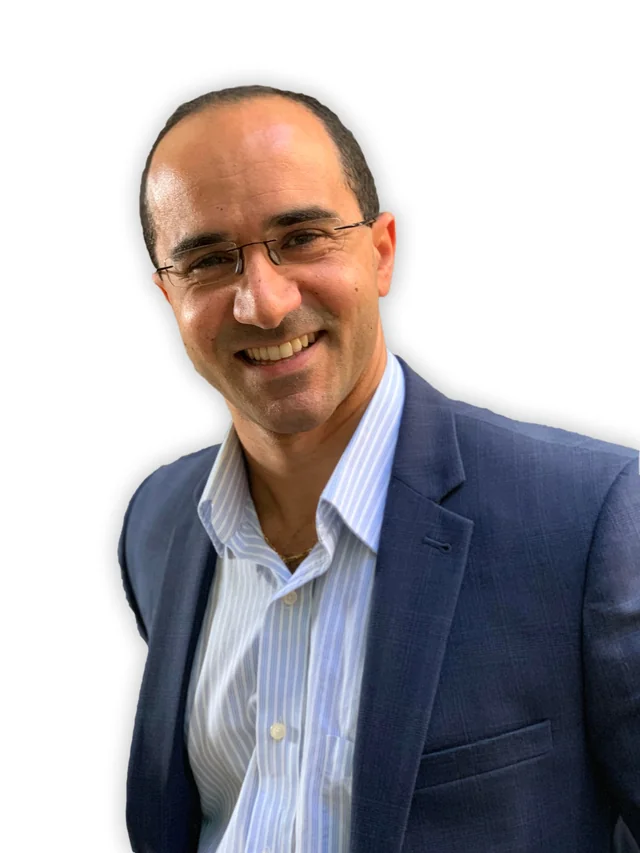
Who you'd be working with
Stuart Andrews works with leaders who have outgrown their operating model and want capability that lasts. The approach is the same in Philippines as anywhere: name the gap, then close it structurally.
Questions leaders in Philippines ask
Is this relevant to Philippines specifically?
The Capability Gap is structural, not cultural. It shows up wherever a business grows faster than its leaders' operating model, so the diagnostic reads your situation directly rather than assuming it.
How is this different from a leadership program?
A program is an event you attend. Installed capability is a system that stays in the organisation, scales with headcount, and keeps performing after the engagement ends.
Where do we start?
With the free diagnostic. It locates where your leadership is currently the bottleneck and shows what installing capability would change first.
Proof
Leaders Stuart has worked with
Real leaders Stuart has worked with — across telco, financial services, healthcare, supply chain and high-growth firms.
Calm, collected and in control
"Stuart oversaw a major RFP for Optus Wholesale, calm, collected and professional throughout, and he kept the panel on the original timelines with excellent control of the vendors the whole way through. I'd happily work with him again on any initiative."
Matt Pankhurst
Director, Mobile Fleet Products · Optus
Gets things done
"Stuart led a large and complex digital transformation our companies delivered together. He always looked for the best solutions even when there were challenges, and went out of his way to build trust, which was key to getting things done. I'd welcome working with Stuart again."
Keith Meier
Chief Financial Officer · Assurant
Navigates complex change
"Stuart and I partnered on an innovative digital program of change to redesign the repair and upgrade experience for our customers. His professionalism, drive and determination are second to none, and he navigates complex and ambiguous change landscapes with ease."
George Colinard
National Operations Director · JnJ Supply Chain
Conscientious and highly skilled
"Stuart is a conscientious, highly-skilled leader with deep insight into the securities-market industry, an expert in needs analysis, planning and execution, with the ability to find creative solutions to complex problems."
Rakesh Vengayil
Chief Operating Officer, Asia Pacific · Global financial services
Simply one of the best
"Stuart is one of the best program managers I've worked with. Not only does he display all the skills of a good program manager, he also has a technical background that allows him to question solutions and quotes. Stuart thrives on a challenge, is honest, reliable and always has a positive attitude."
Susanna Lui
E2E Business Analyst · Optus
Builds high-performance teams
"Stuart builds high-performance teams and effectively executes strategy by delivering successful programs, keeping everyone aware of progress, status and risks along the way."
Ibrahim Dani
Director, Business Delivery (PMO) · Enterprise delivery
In Their Words
Hear from the leaders we work with
Peter Nassif (CEO, Royal Health Inc.) and Amanda Thorpe (Head of People, Culture & Transformation, TMNZ) on what changes when leadership becomes an architecture, not an afterthought.
Proof
What installing capability produced
Real engagements, the constraint, the intervention, and what changed. The same approach we bring to leaders in Philippines.
Optus: strategic prioritisation
Alignment SystemConstraint
A large telecommunications operator needed to cut operational and organisational inefficiencies fast, but had no shared view of which initiatives actually mattered, momentum was spread thin across too many priorities.
Intervention
Ran an accelerated strategic review, surfacing a shortlist of high-value initiatives with material capacity savings and building a continuous-improvement roadmap the management board could act on.
Outcomes
- A clear, board-ready shortlist of high-value priorities replaced a scattered initiative list
- Capacity freed up for the work that actually moved the business
- A continuous-improvement roadmap the leadership team owns going forward
“Stuart is a natural leader with an extraordinary ability to drive initiatives, motivate, develop and empower others by creating a safe environment where they can be themselves.”
Investment bank · APAC · post-merger
Confidential engagementConstraint
By the time Stuart arrived, the post-merger integration had already stalled: two legacy leadership cultures pulling in different directions, decision rights unclear, and execution grinding to a crawl on every front at once.
Intervention
Installed a unified Leadership Operating System, shared direction, clear decision rights, and one operating cadence across the combined executive team, untangling the stalled integration on several fronts in parallel rather than one workstream at a time.
Outcomes
- One leadership team, one operating model, the merger stopped feeling like two companies, resolving the deadlock the earlier approach couldn't move past
- Decisions that used to stall for weeks now get made in the room
- Integration milestones back on track, with board confidence restored
Financial services · securities market · migration
Confidential engagementConstraint
A high-stakes securities-market migration carried significant regulatory and stakeholder complexity, multiple external parties, compliance obligations that couldn't slip, and competing internal priorities. The leadership group had no shared definition of 'done,' so different stakeholders were quietly working to different finish lines, and the real risk was a compliance miss or a stalled handover nobody noticed until it was too late.
Intervention
Built genuine alignment before building the plan, one shared direction, clear ownership for every workstream, and a needs-led approach that tackled the hardest, highest-risk constraints first instead of the easiest wins, so the plan held up under regulatory scrutiny rather than just looking tidy on a slide.
Outcomes
- A diligent, evidence-based path through a complex migration
- Stakeholders aligned on priorities and trade-offs
- Leaders equipped to hold the standard under pressure
Scale-up · founder-led leadership team
Confidential engagementConstraint
Every decision still ran through the founder, the leadership team could execute, but couldn't decide without them, and the business had quietly capped its own growth at the founder's bandwidth.
Intervention
Installed clear decision rights and a structured operating rhythm so the leadership team could resolve issues without escalating everything to the founder, freeing the founder to lead as CEO rather than firefight as operator.
Outcomes
- Founder time spent on operational issues decreased by 45% within 6 months
- Decision turnaround time on key issues reduced by 52% in 3 months
- Engagement scores for the leadership team improved by 18 points over 9 months